
 |
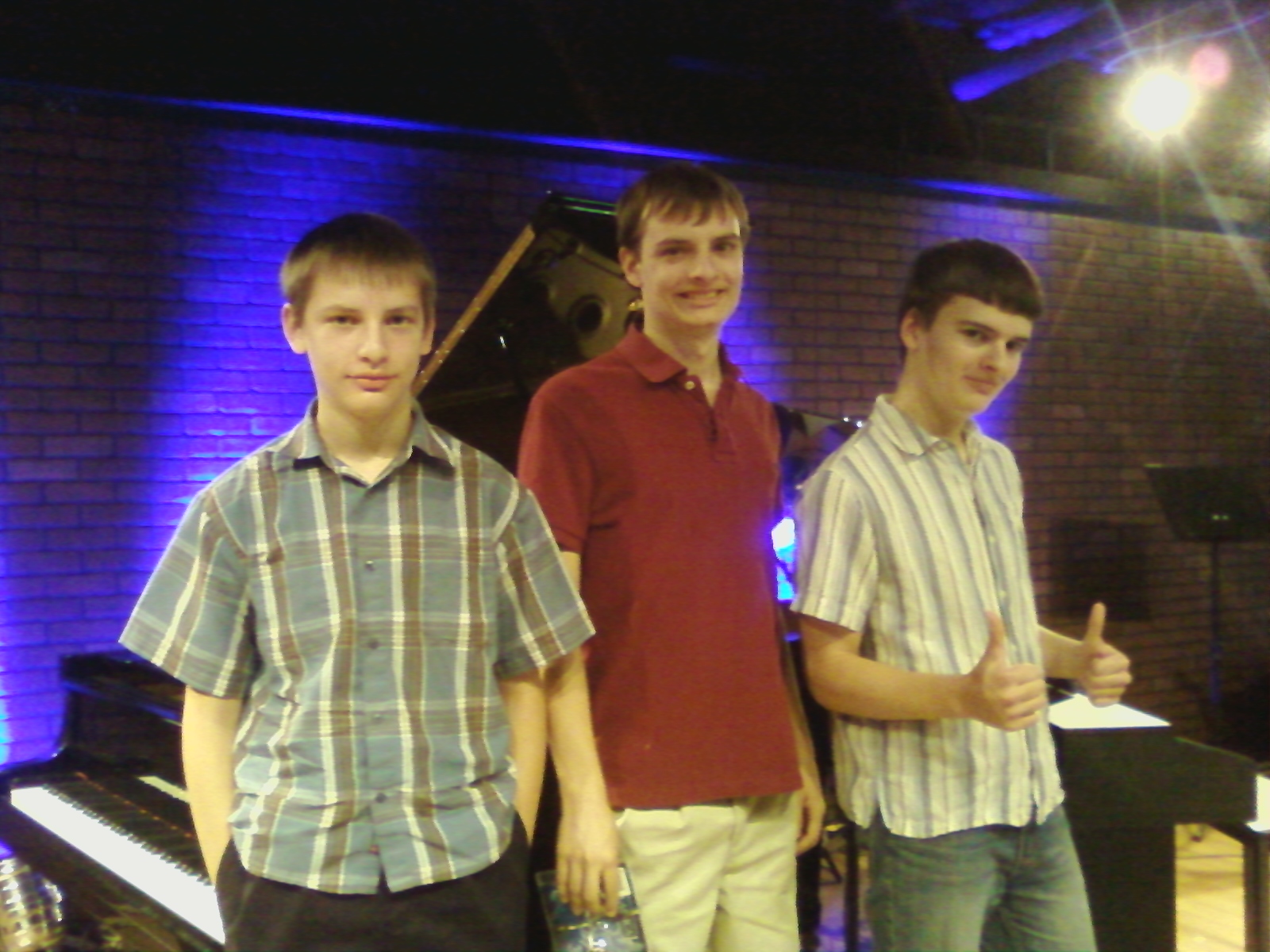
| Cam, Ryan, Nick after a recital |
The apple doesn’t fall very far from the tree. I grew up playing the piano. I never had a choice, and now I teach piano. Rather ironic. I hated practicing daily, and now I ask my students to do exactly that. My boys are no exception. I am mom. I am also piano teacher. They would rather not practice. They can think of so many other things to do.
Bummer.
I remember the day I met my piano teacher. My dad whistled, and my siblings and I fell in line from oldest to youngest. If you’ve seen the musical, The Sound of Music, you know what I’m talking about. My dad introduced this lady to us. “Her name is Miss Sherry. She is your piano teacher. Who is going first?” My siblings and I looked at each other, wondering who wanted this. No one answered. My dad answered his own question then, “Oldest to youngest.” So started years of piano lessons, practice sessions, and recitals.
Over the years I grew to like the instrument, especially when I was able to play music of my own choice. Music opened doors for me. At a very young age I was performing and playing for people. Whether I was playing at church or in school, I played the piano. Sometimes I’d play for friends if requested. I accompanied a few opera singers and other musicians. I met close friends via music. Little did I know this would become a way to communicate with my children with autism. Looking back, I see I related to many people from all walks of life through music.
Teaching music was my first job. At the ripe age of 14 I started teaching. Of course, I became serious and earned my certification when I turned 30. Teaching music has allowed me to stay home and be with my boys. If there is ever a need at school or therapy, I am able to go immediately. I can attend their dietary needs.
Music is also a therapy of sorts for me. I can play Beethoven if I need to let off steam. I can play Beatles or Queen to have fun. Playing movie themes relieves stress. I can have a few minutes of freedom.
When the boys were young, they were never far away. They’d dance. They’d climb on my lap and play the piano via the “bang” method. I’d let them plop their hands of the ivories, and their faces would light up on the sound they created. Being around the piano was a way for us to connect when the boys couldn’t talk. We could smile and have fun simply by playing “sounds”. It didn’t have to be music, per say. Just sitting together and pushing the keys. We had a good time.
Now the boys all play on their own. They play and perform. Teenage boys with autism can and do!
How do I get them to do that? That will be Part II.






 sherylscript